Showing posts with label art. Show all posts

Saturday, 24 January 2015

Image Study VIII: Crude (part 1)

I think that I subconsciously selected this week's concept after working several shifts serving members of the "cultural elite". While I realize the irony in posting "works of art" - from the MET no less- as representative images of crudeness (an irony that the art world has reveled in for the past 100-150 years), crude images - or more correctly, what Western contemporary society has and has not deemed crude- is a compelling subject for study(so compelling, there's a part 2!). Particularly interesting and also frustrating is the acceptance of images that demonstrate the destructive and dehumanizing effects of capitalism as mere pieces of art, valued as commodities that represent the artist's insight into humanity. Over time do these images lose political valence? Did they ever have any?

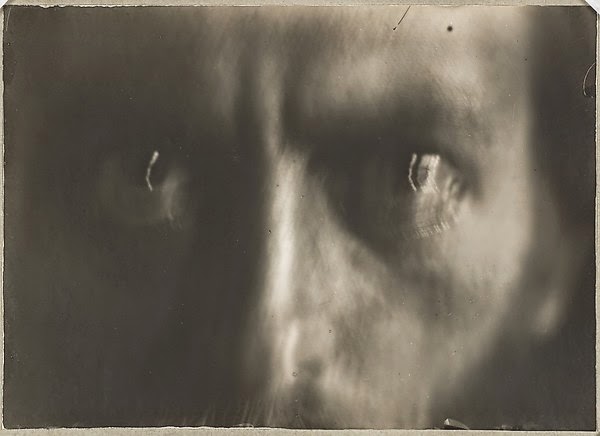
"God" by Baroness Elsa von Freytag-Loringhoven and Morton Schamberg
Morton Schamberg and Elsa von Freytag- Loringhoven - 1917
Photograph- Gelatin silver print

Portrait of an Italian Woman
German painter active first third of 16th century
Oil on wood

Apartment Houses, Paris
Jean Dubuffet - 1946
Oil with sand and charcoal on canvas

The Street
Philip Guston- 1977
Oil on canvas

Berlin Street
George Grosz - 1931
Oil on canvas

Wednesday, 21 January 2015

red, red, red

Fifty Days at Iliam: The Fire that Consumes All before It
Cy Twombly - 1978
Oil, oil crayon and graphite on canvas

Self portrait in a Velvet Dress
Frida Kahlo- 1926
Oil on canvas


Liberty
Jean-Michel Basquiat- 1983
Acrylic, charcoal, crayon, pastel, pencil

Saturday, 17 January 2015

Image Study VII: Possessed

While this is one of my more rushed image study entries,  I think the subject is a rich one- as the term possessed has many different meanings, all of which are both conceptually and aesthetically evocative and controversial.

Melpomene- Landon Rives
Edward Steichen -1904-05
Photograph- Gum bichromate over platinum print

The Dance Class
Edgar Degas- 1874
Oil on canvas

Still Life with Teapot and Fruit
Paul Gauguin- 1896
Oil on canvas

Sir John Herschel
Julia Margaret Cameron- April, 1867
Photograph- Albumen silver print from glass negative

Portrait of a Woman with a Man at a Casement
Fra Filippo Lippi- 1440
Tempera on wood

Sunday, 11 January 2015

random associations -- special thanks to the best art tumblr page B-sides

Blue Balls
Sam Francis- 1961
Painting
Storm Fugue
Stephen Hutchings- 2012
Oil and charcoal on canvas


Just checked-- still my favourite song of 2014/early 2015... questionable video though--- I would have done a better job.

"Fingertips in the fountain
Fondle liquid gold
Ice on the horizon
The skyline folding in
Nothing is beginning
Edges falling off themselves
And the water is draining
Off the continental shelf"

Saturday, 3 January 2015

Image Study V: Regret

Regret has always been a very charged and complex concept for me. It is wrapped up in worry and change and fear and decision-making. It is not a absolute state because I change what is regretful and what is not and so sometimes regrets represent personal growth, but sometimes not.

Tadeus Langier, Zakopane
Stanislaw Ignacy Witkiewicz - 1912-13
Photo- Gelatin Silver Print

New Kitchen/Aerial View/Seated
Laurie Simmons- 1979
Photo- Silver Dye Bleach Print

Memories
Max Weber- 1912
Painting- Oil on Canvas

Pentitence (Poenitentia)
Enea Vico- 1545-1550
Engraving

Sueno No. 1: "Articulos electricos para el hogar"
Grete Stern - 1950
Photo- Gelatin Silver Print

Saturday, 27 December 2014

Image Study IV: Alight in the shadows

The Drinkers
Honore Daumier - 1861
Painting- Oil on wood

Mother and Child
Elizabeth Catlett - 1944
 Lithograph

Portrait of a Marriage
John Gutmann -1935
Photo- Gelatin silver print


Saint Anthony the Abbot in the Wilderness
Osservanza Master - 1435
Painting- Tempera and Gold on wood

The Penitent Magdalen
Georges de La Tour - 1640
Painting- Oil on canvas


Thursday, 25 December 2014

Saturday, 20 December 2014

Image Study III

So, once again I haven't picked a theme (I'm still having too much fun exploring the collection) but I do think that either next week or the following, I will select one.
Hope you enjoy!


Bride With Fan
Marc Chagall - 1911
Painting- Oil on canvas

Learning is Wealth- Wilson, Charley, Rebecca, and Rosa, Slaves from New Orleans
Charles Paxson - 1863-64
Photo- Albumen silver print from glass negative
The Triumph of Fame Over Death
1500-1530 (South Netherlands)
Tapestry- Wool warp, wool and silk wefts
Seville
Henri Cartier-Bresson - 1933
Photo- Gelatin silver print
I'm Dreaming of a Black Christmas
Richard Hamilton - 1971
Mixed medium- Screenprint on collotype, with pasted paper sticker
image source (info can be found on MET site)


Sunday, 14 December 2014

Image study II

Apologies for the lateness-- without further adieu:
(these and more, found here)

The Blackboard, Poland
David "Chim" Seymour- 1948
Photo- Gelatin silver print

Woods Twilight
Edward J. Steichen- 1899
Photo- Platinum Print

West Indies, From the Types of All Nations series (N24) for Allen & Ginter Cigarettes
George S. Harris & Sons- 1889
Commercial color lithograph

Diana And Endymion
Frank Short (based on painting by George Frederic Watts, 1869)- 1891
Etching and Mezzotint

La Poupee
Hans Bellmer- 1934
Photo- Gelatin Silver Print

Thursday, 11 December 2014

Angel Olsen- Stars

I'd like to once again profess my love for Angel Olsen's "new" album (Feb. 2014). The latest song I'm falling all over my self for is "Stars". I was going to simply attach an album version of the song, but YouTube offered up this gold:


One of the things that I like about this track is Olsen's stream of consciousness/fearless lyrics.

I wish I had the voice of everything.
To scream the animals, to scream the earth.
To screams the stars out of our universe.

Olsen's guttural, twangy, searching vocals climb and fall and make you believe her unbelievable words. These words are expressions of things that we can't usually express- they sound like colours a painter would use, unleashed when nothing else seems to make sense or satisfy. And this video is great because Olsen delivers all this pain and frustration and exhilaration with a stoic stare. Just look at her eyes.

Saturday, 6 December 2014

Image Study

Every Saturday, from here on in- hopefully- I'm going to post five images from the MET online database that has recently made it's resources more available to the public. I don't plan on following a theme necessarily, though I may in future posts.

Landscape, Gulf Coast, Louisiana
Walker Evans- 1935
Photo- Gelatin silver print


Femme aux Cartes
Florence Henri- 1930
Photo- Gelatin silver print

Campden Hill, London
Bill Brandt- April, 1949
Photo- Gelatin silver print

Verduta d'alla Villa Medici od Academia di Francia
Giacoma Caneva- 1852
Photo- Salted paper print from paper negative

Melencolia I
Albrecht Durer- 1514
Engraving

Wednesday, 3 December 2014

Egon Schiele- intimacy in art

How does an artist convey an intimate image or experience or inspire the viewer to reflect personally about intimate understandings of themselves? I think about this often when looking at Egon Schiele's "Kneeling Girl in Orange Red Dress"...
Kneeling Girl in Orange Red Dress, 1910 

...a picture that I view often, as it hangs in the 'intimate' space of my bathroom. This picture remains as one of the most powerful portraits that I've ever encountered. I don't know this person, nor am I driven to want to know them, but I can connect with this image intimately. While Schiele is reknowned for depicting women and men engaging in what many understand as intimate sexual acts and for depicting these acts and the bodies engaging (or not engaging) in them in a matter-of-fact way, unglamourous, limbs crudely truncated and bent, skin starkly coloured in shades of white and green and blue and most suggestively- red- while this artist was excised from the art world for decades after his death and reborn as a visionary of the sexually explicit and grotesque, I see his honesty and intimacy not in the positions of bodies or the exposure of genitals, but in the manner Schiele draws his viewer into the thoughts and emotions of his subjects. It is an execution of style that - frankly- I don't think I could explain in words. Please see below for more of what I've struggled to articulate (and to which I've admitted to being inept in doing):
Seated Woman with Bent Knee, 1917

Embrace- Lovers II, 1917
Kneeling Girl propped on her elbows, 1917
Nude Self Portrait, 1916


Saturday, 29 November 2014

powerful men and young women...

...an age old story and one that is currently catching headlines because of certain lurid violent acts, perpetuated by such men known to have ingratiated themselves in the public eye, have been unearthed..
i hadn't planned on posting about this (enough good and bad has been written on the topic), but then I caught myself being fascinated with this image:
Woman with a Fan
Pablo Picasso (1905)
I thought, here is an image I want to post. Something about it's simplicity and complexity intrigues me. It is what it says it is (and it's beautifully achieved) but the awkward posing and emotive colour scheme both hearken the postures of Egyptian hieroglyphs and the expressionism of turn of the century European art- achieved through a more moody, withdrawn and more than anything, controlled technique and composition. This image spans time and space and it is a portrait of a woman- one of the most popular themes in Western art. In attempting to find out more about this piece (that is described as part of Picasso's Blue and subsequent Rose period and in fact, was completed right after he met his first know love interest and right before his work transitioned out of his Blue Period understood to be inspired by a deep depression following the suicide of a close friend) I (perhaps inevitably) became engrossed in the artist's biography and specifically his relationship(s) to women. Picasso is notorious for his philandering and abusive (emotional and physical) tendencies with respect to the women in his life and yet his work - especially his work portraying women- continue to be celebrated. Why is that and does it have something to do with his understanding and ability to both uniquely and referentially depict the patriarchal eye?
As an artist, Picasso has been celebrated as a radical, exploding perceptions of dimension and expression and his personal predilections (from what I can tell) have largely been understood as reflective of the emotional struggles that an artistic genius- such as himself- is wont to endure and enjoy. This doesn't sit right with me and recent "outings" of famous men abusing younger and less powerful women suggests that while such abuse of power continues to be a problem, women have occasionally found ways to fight back.
While the above image inspired me to write about the mysteries of Picasso, this image (below) reminded me that, while a brilliant artist, it's important reflect upon how his misogyny was a driving force in his work. Also, articles like this one demonstrate how easily one can slip into celebrating misogyny as a motivational tool in art.
Picasso looks on (with what seems to be confusion) at the foregrounded figure- his mistress, muse and mother to two of his children, Francoise Gilot. Gilot was an up-and-coming artist at the time of their meeting and left Picasso on her own terms, becoming a celebrated artist.  (Photo by Robert Doisneau)


Regretfully, I've completed another "unfinished thought" post ...